

Is Your Terrazzo Hiding Under Carpet or Tile? Here’s How to Bring It Back to Life
- TPA STONE CARE AND RESTORATION
- Jul 22, 2025
- 5 min read

For decades, terrazzo floors were a symbol of luxury, craftsmanship, and durability — often featured in mid-century homes, public buildings, and upscale spaces. But over the years, many of these floors were covered with carpet, tile, or laminate as styles changed. Now, a growing number of homeowners and renovators are discovering the timeless beauty hiding right beneath their feet.
If you’ve peeled back a corner of your old flooring and spotted what looks like speckled concrete underneath — you might be standing on hidden terrazzo. And the best news? In many cases, that terrazzo can be fully restored.
In this post, we’ll walk you through:
What terrazzo is and why it was covered up
How to tell if it’s salvageable
The restoration process
Before-and-after transformations
What to expect in terms of cost, timeline, and care
What Is Terrazzo — and Why Was It Covered Up?
Terrazzo is a composite flooring made of marble chips (and sometimes glass or shell) mixed with a cement or resin binder, then polished to a glossy, seamless finish. It was especially popular in the 1940s–70s and is prized for its:
Durability — It can last 50+ years when maintained properly
Low maintenance — No grout lines, no warping
Aesthetic flexibility — Colorful, speckled designs that can be subtle or bold
Sustainability — Often made with recycled materials
So why would anyone cover it?
During the 1980s and 90s, design trends shifted. Wall-to-wall carpet became the norm for comfort, while vinyl tile was marketed as “modern.” Some builders and homeowners simply didn’t realize what was underneath — or didn’t appreciate terrazzo’s visual appeal at the time.
Now, with the resurgence of mid-century modern design, eco-conscious renovations, and minimalist aesthetics, terrazzo is back in style — and often, already in your home.
How to Tell If You Have Terrazzo Underneath
If your home was built between the 1940s and 1970s — especially in places like Florida, California, the Southwest, or parts of the Midwest — there’s a good chance terrazzo was originally installed.
Here are a few signs to look for:
Cool-to-the-touch hard surface under loose tile or carpet
Visible marble or stone chips peeking through a dull gray base
Cracks or divots that look more like stone than concrete
The age of the home — many homes built post-WWII used terrazzo as a base floor
If you’re not sure, try lifting a floor vent cover or checking under a closet carpet — sometimes terrazzo reveals itself in unexpected corners.
📸 Tip: Snap a photo and send it to a professional terrazzo restoration company. Many can confirm with just one look.
The Terrazzo Restoration Process: Step-by-Step
Restoring terrazzo isn’t just about polishing it — it’s about carefully bringing a buried floor back to life without damaging its integrity.
Here’s what the process typically looks like:
1. Removal of Existing Flooring
The first step is lifting up old carpet, tile, or vinyl. This must be done carefully to avoid chipping or cracking the terrazzo underneath.
Tile floors often use adhesives that require specialized tools to remove
Carpet glue can leave residue, but it can be ground off safely
Professionals will protect the terrazzo during this stage using non-invasive tools and protective measures.
2. Surface Cleaning & Adhesive Removal
Once exposed, the floor needs a deep clean. This includes:
Scraping off mastic (glue)
Removing wax or sealers
Neutralizing any stains or rust spots
At this stage, the terrazzo will still look dull — but don’t worry, the beauty is underneath.
3. Grinding & Honing
This is where the magic starts. Using planetary grinders with diamond abrasives, professionals will grind the terrazzo down by fractions of an inch to remove surface damage and expose a fresh, even layer.
Grinding smooths out high spots and reveals full color chips
Honing reduces pores and refines the texture
Any cracks, holes, or pits are filled with color-matched epoxy or resin
This is often the most time-consuming step, but it’s worth it — it brings out the floor’s natural luster and detail.
4. Polishing to Desired Finish
Terrazzo can be finished to different levels of shine:
Matte/Satin – Subtle, modern, less slippery
Semi-gloss – Clean, soft reflection
High-gloss – Mirror-like shine, dramatic finish
Polishing is done using progressively finer abrasives, much like sanding wood — until the desired finish is reached.
5. Sealing & Final Touches
Finally, a penetrating sealer is applied to protect the surface from moisture and staining. (Pro tip: Avoid topical sealers — they can dull over time and trap dirt.)
Once sealed, the floor is buffed — and ready to wow.
🔄 Before & After: Real-Life Terrazzo Transformations
Let’s take a look at what restored terrazzo actually looks like. (Note: If this is going on your company blog, you can insert your own photo gallery here.)

Before:
Dull gray surface with tile glue residue
Uneven patches and old tack strips
Covered for 30+ years

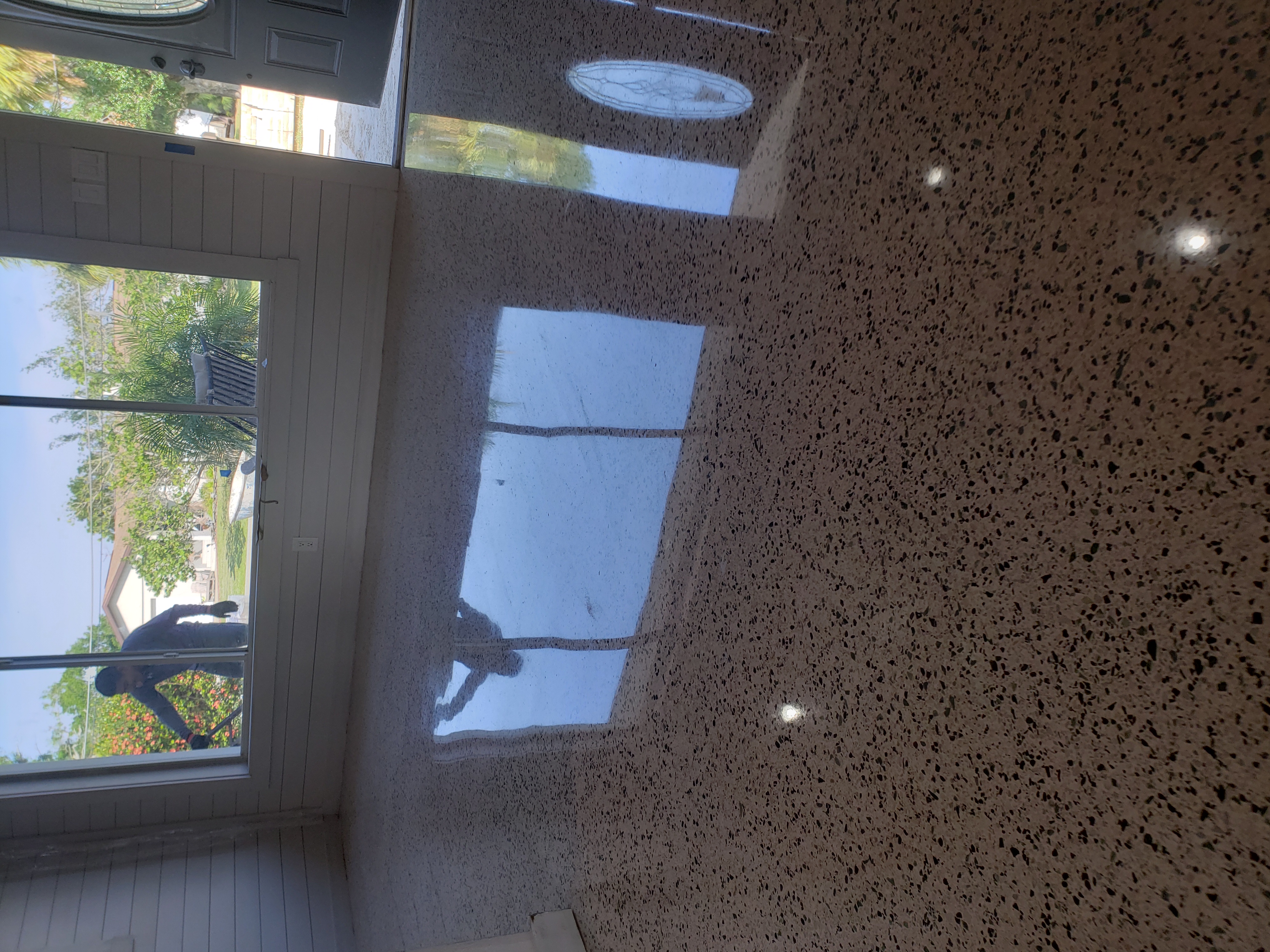
After:
Glossy surface with vibrant marble chips
Fully leveled and polished
Restored to like-new condition
Many clients are shocked at how beautiful their original floors turn out — and how different their home feels once the terrazzo is revealed.
Common Questions from Homeowners
“Will my floor be damaged from the old glue or tile?”
In most cases, no. Professional restoration includes removal of adhesives without harming the terrazzo. Even if there are minor blemishes, color-matching techniques can blend imperfections.
“Can terrazzo be restored if it’s cracked?”
Yes! Cracks and chips can be repaired using color-matched epoxy, often becoming nearly invisible once polished.
“How long does restoration take?”
Most residential terrazzo restorations take 2 to 5 days, depending on square footage and level of damage.
What About Cost?
The cost of terrazzo restoration depends on several factors:
Square footage
Current condition of the floor
Glue or tile removal required
Desired polish level
On average, you can expect to pay between $3 to $8 per square foot, which is significantly cheaper than installing new flooring — and more sustainable, too.
Restoring your terrazzo is not only cost-effective but adds long-term value to your home.
Caring for Your Restored Terrazzo
Once your terrazzo is restored, you’ll want to keep it looking beautiful. The good news? It’s one of the easiest floors to maintain.
Basic Care Tips:
Sweep or dust-mop regularly
Clean with a pH-neutral floor cleaner (no vinegar or harsh chemicals)
Avoid waxes or polishes — they dull the natural shine over time
Re-seal every 3–5 years (or as recommended by your restoration pro)
With simple care, terrazzo floors can last for generations — and often look even better with age.
The Bottom Line: Bring Back What’s Already Yours
If you’re standing over old tile or carpet, wondering what lies beneath — there’s a good chance your home is hiding something special. Terrazzo restoration allows you to reclaim a piece of your home’s original beauty while adding durability, elegance, and sustainability to your space.
And remember: restoring terrazzo isn’t just a renovation — it’s a revival.
📞 Ready to See What’s Underneath?
(813) 724-0448
If you’re curious whether your home has hidden terrazzo floors worth restoring, we’re here to help. Reach out for a free consultation or send us a few photos — we’ll guide you through what’s possible.
Would you like me to create social media snippets or headlines from this blog for Facebook and Instagram?


Comments