

Commercial Terrazzo Care Guide for Busy Floors
- brigi rodriguez

- Jun 3
- 5 min read
A terrazzo floor can make a lobby, school, office, or retail space look sharp for decades - but only if the care plan matches the traffic it takes every day. This commercial terrazzo care guide is built for property managers, facility teams, and business owners who need floors to stay clean, polished, and professional without creating unnecessary maintenance costs.
Terrazzo is durable, but it is not maintenance-free. That distinction matters. Many commercial floors lose their shine long before they wear out because the wrong pads, harsh chemicals, or inconsistent cleaning routines slowly dull the surface. What looks like "old terrazzo" is often a floor that needs a better maintenance strategy or a true restoration process.
What commercial terrazzo needs most
Commercial terrazzo performs best when maintenance focuses on preserving the finish rather than forcing shine back with aggressive products. Day-to-day care should remove grit, control spills, and prevent surface abrasion. Once scratches and etching build up, routine janitorial work alone usually cannot return the original clarity and gloss.
That is where many facilities lose time and money. Staff may keep mopping and burnishing a floor that already needs honing, polishing, or sealing. The result is a floor that still looks dull even though it is being cleaned regularly. In high-visibility spaces, that affects the appearance of the entire property.
A good care plan starts by separating three different needs: daily cleaning, periodic maintenance, and restoration. When those are treated as the same thing, terrazzo either gets overworked or neglected.
Daily care in a commercial terrazzo care guide
Daily care should be simple, consistent, and gentle on the surface. Dry dust mopping or microfiber sweeping is the first line of defense because sand and fine grit act like sandpaper under foot traffic. In entry areas, hallways, and reception spaces, removing that abrasive soil matters more than most people realize.
Wet mopping should use a neutral-pH cleaner made for stone or terrazzo surfaces. Strong alkaline cleaners, acidic products, and general-purpose degreasers can leave residue or gradually affect the finish. More product is not better here. A properly diluted cleaner lifts soil without creating buildup that makes the floor look hazy.
Spill response also matters, especially in healthcare, hospitality, schools, and food-adjacent areas. Even though terrazzo is durable, liquids left sitting can stain or work into vulnerable spots if the sealer is worn. Fast cleanup protects both appearance and slip resistance.
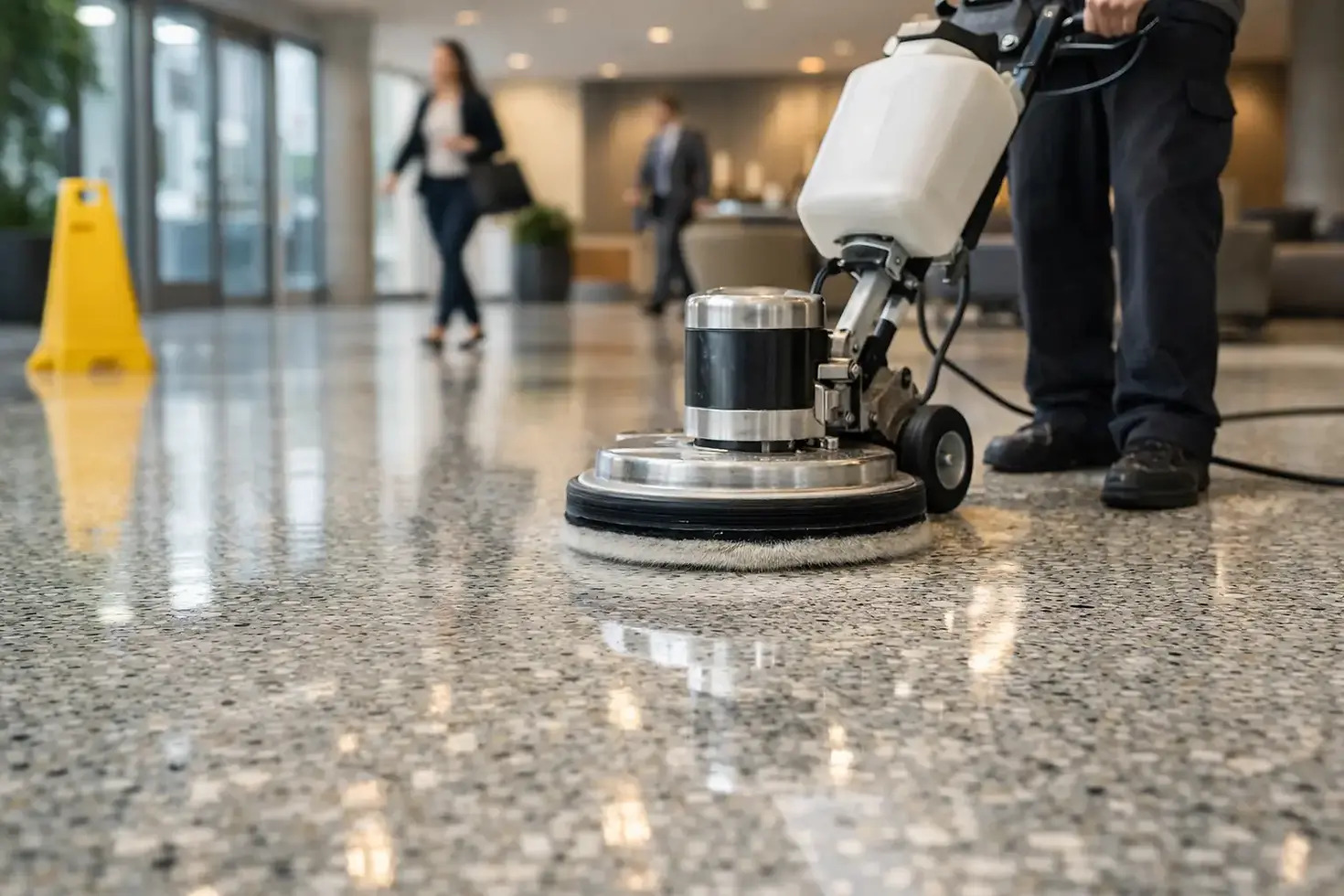
If your team uses auto scrubbers, pad selection and water management are worth attention. A machine can help in larger spaces, but overly aggressive pads or dirty recovery systems can create more problems than they solve. The right setup cleans efficiently without grinding down the finish.
The common mistakes that dull terrazzo
Most terrazzo problems in commercial buildings are not caused by age alone. They come from avoidable maintenance habits.
One common mistake is using waxes or topical finishes that are not appropriate for the floor. In some settings, people try to create gloss by applying a surface coating instead of restoring the terrazzo itself. That may give a short-term shine, but it can also yellow, trap dirt, scuff unevenly, and leave the floor looking patchy over time. Removing those coatings later adds cost.
Another issue is using harsh scrub pads to chase stains or traffic patterns. That often leaves inconsistent wear, especially near entrances, elevators, and service corridors. The floor may look cleaner at first, but the overall finish becomes flatter and more scratched.
There is also the problem of residue. Soap-heavy cleaners and improper dilution can leave a film that attracts dirt and mutes reflectivity. If a floor looks dull shortly after cleaning, residue is often part of the story.
Finally, some facilities wait too long to address visible wear. Light surface dullness is one thing. Deep scratching, etched areas, embedded staining, and widespread traffic lanes usually signal that the floor needs professional restoration, not another round of routine maintenance.
How often should commercial terrazzo be serviced?
It depends on the use of the building, the amount of foot traffic, and what image the property needs to present. A medical office with steady daily traffic has different needs than a boutique retail space or a private office suite. Entrance exposure also changes the schedule. Floors that receive moisture, sand, and outdoor debris need more attention than interior areas with controlled traffic.
For many properties, daily dust removal and regular damp mopping are enough to keep the surface presentable between larger service intervals. Periodic deep cleaning helps remove embedded soil and restore a cleaner, brighter appearance. But once the finish has noticeably dropped, the floor may need polishing or honing to correct wear instead of just cleaning around it.
That is why inspection matters. Looking at the floor under direct light tells you more than a cleaning log does. If the shine is uneven, traffic lanes are obvious, or scratches remain after cleaning, it is time to reassess the maintenance plan.
When polishing is enough and when restoration is needed
Not every terrazzo floor needs a full restoration. In some cases, professional polishing can improve clarity and gloss if the wear is still superficial. This works best when the surface is generally sound and the damage has not cut too deeply into the finish.
Restoration becomes the better option when the floor has widespread scratching, dull traffic lanes, staining, etching, or an uneven appearance from years of mixed maintenance methods. A proper restoration process can include honing, polishing, stain treatment, repair work, and sealing, depending on the condition of the floor.
This is where specialization matters. Terrazzo responds well to skilled restoration, but it does not benefit from a one-size-fits-all janitorial approach. Aggregate exposure, binder type, previous coatings, and existing damage all affect the right process. Treating terrazzo like VCT or generic hard flooring usually leads to disappointing results.
Protecting shine between professional services
The best way to extend the life of polished terrazzo is to reduce the wear that causes dullness in the first place. Entry matting is one of the most effective tools because it catches grit and moisture before they spread across the floor. In commercial settings, that simple step can make a major difference.
Cleaning staff training helps as well. Teams should know which chemicals are approved, how much cleaner to use, and which pads or brushes are safe for the surface. Even a good product can create problems if it is overused or paired with the wrong equipment.
Furniture and equipment traffic should also be considered. Rolling carts, ladders, and chairs can mark or scratch terrazzo if wheels are damaged or debris gets trapped underneath. Protective practices are often overlooked in facilities where floors take constant operational wear.
If your building has multiple terrazzo areas, it may make sense to break them into zones. A main entrance, elevator lobby, and public corridor often need a different maintenance rhythm than low-traffic offices or back-of-house areas. That approach keeps resources focused where appearance matters most.
Choosing the right help for commercial terrazzo
If a terrazzo floor is central to your building's presentation, the provider matters as much as the process. A specialist should be able to evaluate whether the floor needs cleaning, polishing, or full restoration rather than recommending the same service every time. They should also be clear about expected results. Some damage can be dramatically improved, while deeply neglected floors may require more involved correction.
For property managers and owners in Tampa Bay, this is especially relevant in buildings that see heavy humidity, frequent rain tracked indoors, and year-round foot traffic. Floors in those conditions benefit from a maintenance plan designed around local realities, not generic advice.
A well-maintained terrazzo floor does more than look clean. It supports the image of the property, protects a long-term investment, and reduces the cycle of temporary fixes that never quite restore the original shine. If your floor still looks tired after regular cleaning, that is usually the signal to stop treating a restoration issue like a janitorial one. The right care at the right time keeps terrazzo doing what it was built to do - perform well and look exceptional for years.


Comments