

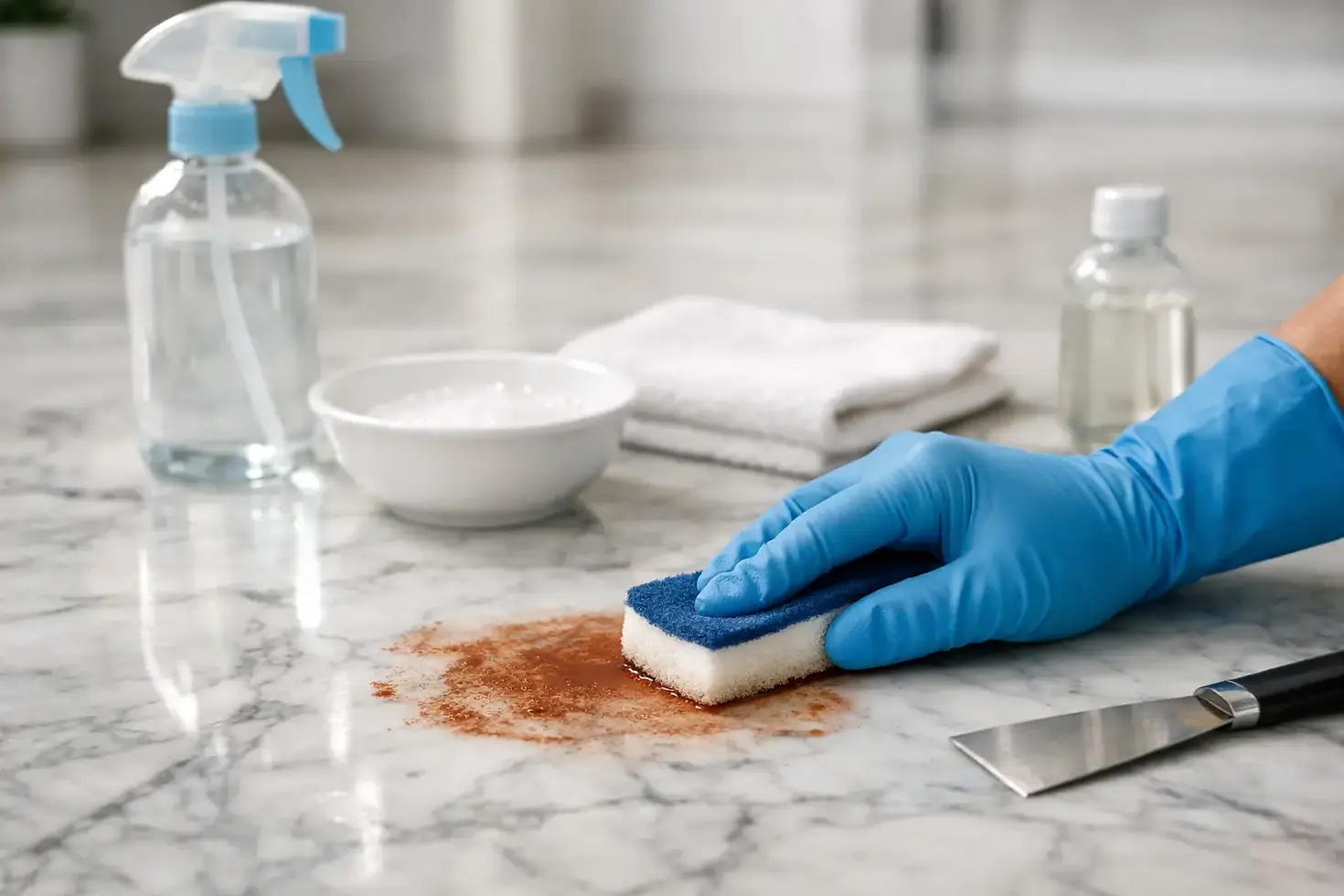
Marble Floor Stain Removal That Works
- brigi rodriguez

- 2 days ago
- 6 min read
A dark spot near a kitchen island or a rust-colored ring under a planter can make an otherwise beautiful marble floor look tired fast. Marble floor stain removal is possible in many cases, but the right approach depends on what caused the stain, how long it has been there, and whether the stone has also been etched or dulled.
That distinction matters because marble is not a forgiving surface. It is porous, it reacts to acids, and it can hold onto discoloration below the surface. A floor that looks simply stained may actually have two problems at once - a stain inside the stone and surface damage on top. Treating both correctly is what brings the floor closer to its original appearance.
Why marble stains differently than other floors
Marble is a natural stone made largely of calcium carbonate. That gives it a rich, classic look, but it also means the surface is more sensitive than ceramic tile, porcelain, or many man-made materials. Liquids can penetrate the pores, especially if the finish is worn or the stone is overdue for sealing.
This is why spills that seem minor on other floors can leave visible marks on marble. Coffee, oil, cosmetics, plant water, pet accidents, and cleaning products can all create different kinds of discoloration. In busy homes and commercial spaces, repeated exposure tends to build on itself. A single event may not leave much behind, but regular contact in the same area often will.
In Florida properties, humidity and tracked-in moisture can add another layer of difficulty. Moisture does not always create a classic stain on its own, but it can carry minerals, dirt, or metal transfer into the stone and make an affected area harder to correct.
The first step in marble floor stain removal
Before using any product, identify whether you are looking at a true stain, an etch mark, or both. This is where many DIY attempts go off track.
A stain usually appears as a discoloration within the stone. It may be darker, yellow, brown, orange, green, or pink depending on the source. An etch mark is different. It is a chemical burn caused by an acidic substance such as vinegar, citrus, or some bathroom products. Etching often looks dull, lighter than the surrounding area, or slightly rough when viewed from an angle.
If the surface feels smooth but looks discolored, you are likely dealing mostly with a stain. If the finish looks cloudy or has lost its shine, surface restoration may also be needed. Trying to scrub out an etch with stronger cleaner will not solve the problem and can make the floor look worse.
Common stain types and what they mean
Organic stains from coffee, tea, food, leaves, or pet accidents usually appear brownish or pinkish. Oil-based stains from cooking grease, lotions, or cosmetics tend to darken the stone. Rust stains are often orange or reddish-brown and can develop when metal furniture legs, cans, or planters stay in contact with damp marble.
Mildew or moisture-related staining may show up as darker patches in consistently damp areas. In some cases, old waxes, mop residue, or the wrong cleaning products create buildup that looks like staining but is actually a film on the surface.
The source matters because the treatment is not one-size-fits-all. A method that helps lift an organic stain may do very little for oil, and rust can be especially stubborn. Some discoloration improves significantly. Some only improves partially. Marble responds best when the problem is diagnosed early and treated with realistic expectations.
What not to use on marble
The biggest mistake in marble floor stain removal is reaching for common household cleaners without checking whether they are stone-safe. Vinegar, bleach, bathroom cleaners, grout cleaners, and many multipurpose sprays can damage marble. So can abrasive powders, stiff brushes, and aggressive scrubbing pads.
Even products marketed as heavy-duty floor cleaners may strip a topical finish, dull a polished surface, or drive the stain deeper by over-wetting the area. Steam cleaning can also be risky on natural stone floors depending on the condition of the marble and the grout lines.
For day-to-day care, pH-neutral stone cleaners are the safer choice. They are designed to clean without triggering the acid reaction that causes etching. That does not mean every stain can be removed with neutral cleaner alone, but it does protect the floor from avoidable damage.
When DIY methods can help
If the stain is recent and isolated, a careful first response can make a difference. Blot spills quickly instead of wiping them across the floor. Clean the area with a pH-neutral stone cleaner and a soft cloth or microfiber mop. Then let the surface dry fully so you can see what remains.
For some stains, a poultice may be appropriate. A poultice is a stain-lifting paste applied over the affected area to draw discoloration out of the stone as it dries. This can work well in the right situation, but the correct formula depends on the stain type and the marble finish. Using the wrong combination can leave mixed results or create a larger cleanup issue.
This is where caution pays off. DIY treatment makes the most sense for small, non-acidic stains when the floor is otherwise in good condition and the homeowner is using stone-safe materials. If the stain is old, widespread, or located in a high-visibility area, testing products without a clear plan can create more noticeable variation in the finish.
When professional marble floor stain removal makes sense
Professional service becomes the smarter option when the stain has been there for a while, the floor has multiple affected areas, or the marble also shows dullness, scratches, or etching. In those cases, the job is no longer just about spotting a stain. It is about correcting the stone in a way that keeps the floor looking even.
A specialist can identify whether the floor needs stain treatment, honing, polishing, sealing, or a combination of those steps. That matters because a stain may fade while the surrounding finish still looks worn. The goal is not simply to make one mark lighter. It is to restore a cleaner, more consistent appearance across the floor.
There is also a practical difference between general cleaning and stone restoration. Marble responds best to technicians who work specifically with natural stone and understand how different finishes react. In homes, that may mean preserving a polished entry or kitchen floor without creating patchy shine. In commercial settings, it may mean improving presentation while reducing the wear pattern that heavy traffic leaves behind.
For property owners in the Tampa Bay area, climate and use patterns often make this more than a cosmetic concern. Sand, moisture, cleaning residue, and repeated foot traffic can all compound the appearance of stains over time. TPA Stone Care approaches these floors as restoration work, not just cleaning, which is often the difference between a short-term improvement and a more meaningful result.
Prevention is part of stain control
Once the visible stain is addressed, prevention becomes the next step. Marble floors hold their appearance better when spills are cleaned promptly, mats are used in problem areas, and the surface is sealed on an appropriate schedule. Sealer does not make marble stain-proof, but it slows absorption and gives you more time to respond.
Cleaning habits matter too. Use a dedicated stone cleaner rather than whatever is under the sink. Avoid over-wetting the floor. Replace worn felt pads under furniture and decorative pieces that may trap moisture or create metal transfer. In commercial spaces, entry matting and routine maintenance can make a noticeable difference in how quickly marble starts to look worn or discolored.
The right maintenance plan depends on use. A residential foyer and a hotel lobby do not wear the same way, and even two homes with marble can have very different needs depending on pets, cooking, sunlight, and traffic. That is why blanket advice only goes so far.
A better way to think about stained marble
Stains on marble are frustrating because they draw attention immediately, but they are rarely just a surface-cleaning issue. They are a signal that the stone has absorbed something, the finish may be vulnerable, or the maintenance routine needs adjustment. Taking the right next step early gives you more options and usually leads to a better-looking floor.
If your marble floor has a stain that keeps catching your eye, the most helpful move is not to try stronger chemicals. It is to treat the stone with the same level of care you would give any high-value surface in the property. That is how marble keeps its shine, its character, and its place as one of the most impressive floors you can own.


Comments