

What Causes Marble Etching?
- brigi rodriguez

- 6 days ago
- 6 min read
A polished marble floor can look flawless one day and show dull rings, cloudy patches, or light marks the next. If you are wondering what causes marble etching, the short answer is acid contact. The longer answer matters, because etching is not a stain sitting on top of the stone. It is surface damage caused when acidic substances react with the calcium carbonate in marble and disturb the finish.
That is why marble can lose its shine even in a clean, well-kept home or commercial space. A countertop may etch from lemon juice, vinegar, or wine. A marble floor may etch from bathroom products, drink spills, tracked-in residue, or the wrong cleaner. In each case, the polished surface is chemically changed, which leaves behind a dull or textured spot that catches the light differently.
What Causes Marble Etching on Floors and Counters
Marble is a natural stone, but it is also a calcium-based material. That composition is what gives it beauty, depth, and a classic polished look. It is also what makes it vulnerable to acids.
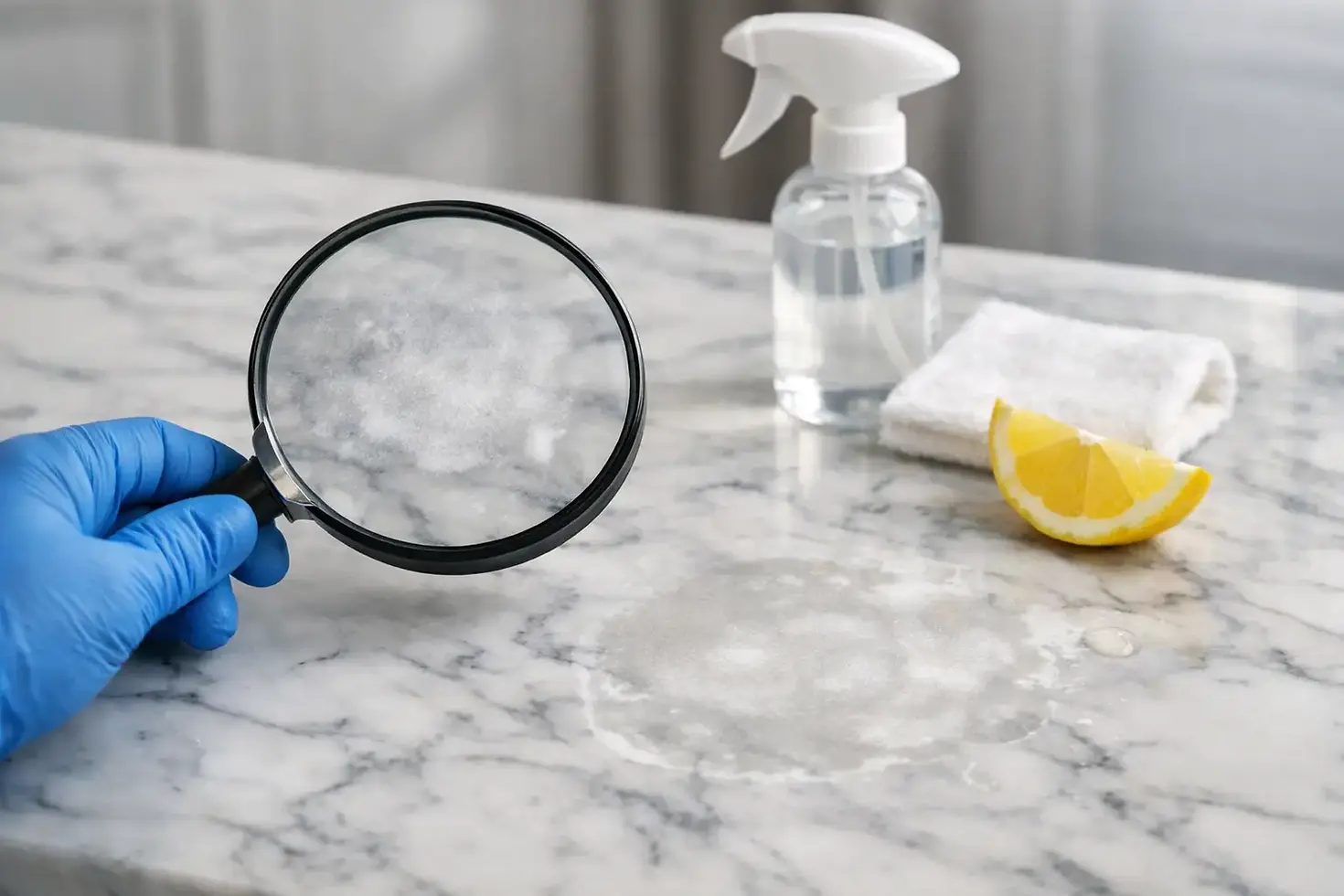
When an acidic substance touches marble, it begins to dissolve a tiny amount of the surface. On a polished finish, even a slight reaction is enough to break the smooth reflective layer. The result is an etched mark that often looks lighter, flatter, or less glossy than the surrounding area. On honed marble, the damage may be less visible, but it can still alter the texture.
Many people mistake etching for staining. The difference is important. A stain adds discoloration because something has penetrated the stone. Etching changes the stone itself at the surface. You can wipe a spill away, but if the acid had enough contact time, the dull mark may remain.
Common sources of marble etching
In residential spaces, the most common culprits are everyday acidic products. Citrus juice, tomato sauce, coffee, wine, soda, and vinegar are frequent causes. In bathrooms, some soaps, cleaners, hair products, and toiletry spills can create etching, especially if they sit on the stone.
In commercial settings, the risk often comes from maintenance practices as much as spills. Using a general-purpose cleaner that contains acidic ingredients can create widespread dulling over time. Restrooms, break rooms, lobbies, and entry areas are especially vulnerable because marble surfaces there see heavier traffic and more exposure to residue.
Even mild acids can be enough. Marble does not need a harsh industrial chemical to etch. A splash of juice, a cleaning spray not made for natural stone, or a damp glass left in place can all leave visible marks.
Why etching can look worse on polished marble
Polished marble shows etching more clearly because the finish depends on a very smooth, highly reflective surface. Once acid disrupts that top layer, light no longer reflects evenly. That is why an etched area often looks dull even when the color has not changed much.
Honed marble can etch too, but the lower-sheen finish tends to hide minor marks better. That does not mean honed marble is damage-proof. It simply means the visual contrast is lower. For some property owners, that trade-off makes honed marble more practical in high-use areas. For others, the brighter look of polished marble is worth the extra care.
Cleaners that often cause accidental etching
One of the most common mistakes is assuming a cleaner is safe because it works well on tile, glass, or other hard surfaces. Marble needs a pH-neutral cleaner made specifically for natural stone. Products containing vinegar, lemon, bleach blends, bathroom acids, or descaling agents can damage the finish quickly.
This is where good intentions often cause problems. A homeowner wants a deeper clean, or a janitorial team uses its standard restroom products on marble. The surface may look clean in the moment, but repeated use gradually removes shine and creates an uneven appearance.
If a floor has scattered dull spots near sinks, vanities, dining areas, or restroom fixtures, the issue is often not dirt. It is chemical reaction damage that routine mopping cannot fix.
Does sealing prevent marble etching?
This is one of the biggest points of confusion. Sealing helps marble resist staining by slowing absorption, but it does not stop etching from acids. A sealer is not a shield against chemical reaction.
That means even sealed marble can still etch if orange juice, wine, vinegar, or an acidic cleaner touches the surface. Sealing is still a smart part of stone care because it protects against certain types of staining and makes maintenance easier. It is just not the full answer.
For property owners, that distinction matters. If marble has been sealed and still develops dull marks, the sealer did not fail. The surface was exposed to something that chemically affected the finish.
What marble etching looks like
Etching does not always look dramatic at first. Sometimes it appears as water-ring-like marks, cloudy patches, light drips, or a general loss of polish in one area. On floors, it may show up as traffic lanes that seem faded even after cleaning. On counters, it often appears around sinks, prep areas, or places where drinks are set down.
In some cases, etched areas feel slightly rougher than the surrounding stone. In others, the change is mostly visual. The severity depends on the type of acid, how long it remained on the marble, and the finish of the stone.
Older marble surfaces may also show a combination of problems at once. Etching can exist alongside scratches, wear patterns, soap buildup, and embedded soil. That is why a damaged floor sometimes looks worse than a simple spot-cleaning issue. The finish itself has been compromised.
Can you remove marble etching yourself?
It depends on the size, depth, and location of the damage. Very minor etching on a small area may respond to a marble polishing powder or stone-safe polishing product if it is used correctly. But there is a real trade-off here. Using the wrong product or too much pressure can make the finish uneven, create new swirl marks, or leave a patch that does not match the surrounding surface.
For larger etched areas, floor-wide dulling, or commercial spaces where appearance matters, professional restoration usually delivers the better result. That is especially true when the goal is to bring back an even polish rather than improve one small spot.
Restoration is not just about making marble shiny again. It is about correcting the damaged finish in a controlled way so the surface looks consistent. Depending on the condition of the stone, that may involve honing, polishing, and sealing with methods suited to the marble and its current wear.
How to prevent marble etching
Prevention comes down to daily habits and correct maintenance. Wipe spills quickly, especially anything acidic. Use coasters, trays, and mats where appropriate. Clean with a pH-neutral stone cleaner rather than a general household product.
For floors, it also helps to control grit and residue before they spread. Entry mats, regular dust mopping, and stone-safe maintenance products can reduce wear and limit the need for aggressive cleaning. In commercial buildings, training cleaning staff on natural stone care can prevent a lot of avoidable damage.
The right maintenance plan depends on the space. A guest bathroom and a busy hotel lobby do not face the same risks. A polished kitchen island and a marble office reception floor also wear differently. That is why stone care is rarely one-size-fits-all.
When professional marble restoration makes sense
If the marble has isolated dull spots, widespread loss of shine, or uneven areas that never look clean, restoration is often the most practical next step. This is especially true when the surface is a feature of the property and its appearance affects first impressions, cleanliness, or long-term value.
A specialist can identify whether the problem is etching, staining, wear, or a combination of issues. That matters because each problem calls for a different solution. General cleaning companies may treat dull marble like a maintenance problem when it is actually a restoration issue.
For homeowners and property managers in Tampa Bay, working with a company that focuses on natural stone can save time, protect the material, and produce a finish that looks right across the whole surface. TPA Stone Care approaches marble restoration with that specialist mindset, which is what delicate surfaces require.
Marble etching is common, but it is not something you have to live with. Once you understand what causes it, you can make better choices about cleaning, maintenance, and restoration - and keep the stone looking the way it should.


Comments