

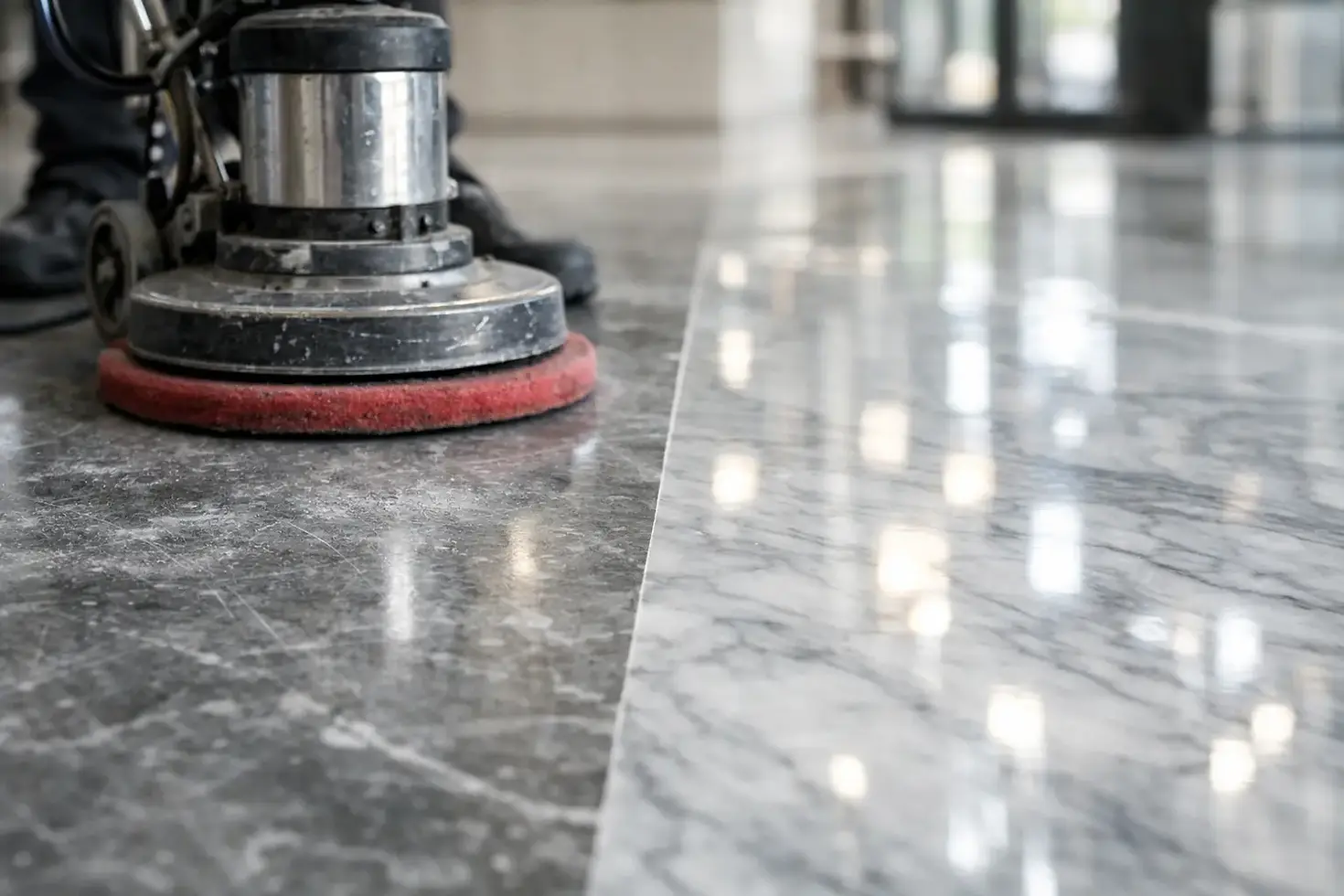
Marble Restoration That Brings Back Shine
- brigi rodriguez

- Jun 7
- 6 min read
A marble floor rarely looks worn all at once. The change usually shows up in stages - traffic lanes lose their reflection, spills leave dull spots, edges darken, and scratches start catching the light. By the time most property owners start looking into marble restoration, the stone has already been telling them for a while that it needs professional care.
That matters because marble is not just another hard surface. It is a calcium-based stone that reacts differently than tile, porcelain, or concrete. What looks like a simple cleaning issue is often surface damage that standard mopping, household cleaners, or wax-based products cannot fix. Proper restoration is about correcting the stone itself, not covering the problem.
What marble restoration actually fixes
Marble restoration is the process of removing damage from the surface of the stone and refining it back to the finish you want, whether that is a soft honed look or a high-gloss polish. Depending on the condition of the floor, that can include stain treatment, scratch removal, honing, polishing, and sealing.
The most common issue is etching. This happens when acidic substances such as juice, coffee, cleaners, or restroom products react with the marble and leave behind dull marks. Many owners assume these spots are stains, but etched marble is physically damaged at the surface. It needs mechanical restoration, not just a stronger cleaner.
Scratches are another frequent problem, especially in entryways, kitchens, lobbies, and hallways. Grit carried in on shoes acts like sandpaper. Over time, the floor loses clarity and starts to look cloudy even after it has been cleaned. Deep wear can make an otherwise high-end surface look neglected.
Staining can also be part of the picture, although not every stain comes out completely. Oil, rust, organic discoloration, and moisture-related darkening each behave differently. A good restoration plan starts with identifying what kind of damage is present instead of treating every spot the same way.
Why marble loses its finish
Marble is durable, but it is not maintenance-free. In homes, wear often comes from everyday foot traffic, furniture movement, and the use of products that are too harsh or too acidic. In commercial settings, the problem is usually volume. More traffic means more abrasion, more tracked-in grit, and faster loss of finish.
The wrong maintenance routine makes the problem worse. Some floors are coated with products that create buildup, trap soil, or leave the surface uneven. Others are cleaned often but never properly refinished, so the stone keeps losing definition year after year. A floor can be spotless and still look worn.
Florida properties face an added challenge because sand and fine grit are hard on natural stone. In busy spaces, especially near entrances, marble can dull faster than owners expect. Regular cleaning helps, but once the finish is damaged, cleaning alone will not bring the shine back.
Marble restoration vs. basic cleaning
This is where many property owners lose time and money. Basic cleaning removes soil from the surface. Marble restoration removes damage from the stone. Those are two very different services.
If a marble floor looks hazy, blotchy, scratched, or etched after it has been cleaned, the issue is almost never dirt alone. It is wear. Trying stronger chemicals usually does not help and can make the finish worse. The right approach is to mechanically hone and polish the surface using stone-specific methods designed for marble.
That is also why general janitorial care has limits. Routine maintenance is important, but restoration requires specialized equipment, the correct abrasives, and enough experience to read the stone properly. Marble varies in hardness, finish, and sensitivity. What works on one floor may not be right for another.
The marble restoration process
A professional marble restoration service starts with inspection. The surface has to be evaluated for etching, scratches, lippage, staining, traffic patterns, and previous coatings or treatments. The desired end result matters too. Some clients want a reflective, polished finish. Others prefer a honed finish that looks softer and can show less etching between services.
If the floor has embedded soil, residue, or topical buildup, that is addressed first. From there, the stone is honed as needed to remove scratches, etches, and surface wear. Honing uses progressively finer abrasives to level and refine the marble. If a polished finish is requested, the surface is then polished to restore clarity and reflectivity.
Stain treatment may be performed where appropriate, although results depend on the source and age of the stain. Finally, sealing can be applied to help the marble resist future absorption. Sealer is useful, but it is not armor. It helps buy time for cleanup and supports maintenance, but it does not stop etching from acids.
A good restoration should leave the floor looking more even, cleaner, and noticeably brighter without looking artificially coated. The goal is to restore the natural beauty of the stone itself.
When to schedule marble restoration
Some floors clearly need attention. Others decline gradually, so owners get used to the appearance and stop noticing how much the finish has changed. A few signs usually tell the story.
If light no longer reflects evenly across the floor, if dull spots remain after mopping, if etched rings or traffic lanes are visible, or if the marble feels rough instead of smooth, restoration is likely the right next step. In commercial spaces, you may also notice that the floor affects first impressions. A dull lobby or worn common area can make the entire property feel less maintained.
There is also value in not waiting too long. Light to moderate damage is usually more straightforward to correct than deep wear that has been left in place for years. Earlier restoration can reduce the level of grinding needed and help preserve more of the stone over time.
What results should you expect?
The best marble restoration results are visible, but they should also be realistic. Most worn marble can be improved dramatically. Shine can be brought back, etching can be removed, and the floor can regain a cleaner, sharper appearance. In many cases, the transformation is significant enough that the space feels updated without replacing the stone.
That said, results depend on the condition of the marble, the depth of damage, the color and pattern of the stone, and how it has been maintained. Some deep stains, chips, or structural issues may remain partially visible. A trustworthy contractor will explain that upfront instead of promising a perfect reset on every floor.
For many owners, the real benefit is bigger than appearance alone. Restoring marble helps protect the investment already in place. Replacement is disruptive and expensive. Restoration extends the life of the floor, improves presentation, and supports long-term property value.
Choosing the right company for marble restoration
Not every floor care company specializes in natural stone, and that difference matters. Marble restoration is a technical service. The wrong process can leave swirl marks, uneven gloss, unnecessary wear, or a finish that does not last.
Look for a company that works specifically with marble and other natural stone surfaces, not one that treats stone as an add-on service. Ask how they identify etching versus staining, what finish options they recommend, and how they approach ongoing maintenance after restoration. Clear answers usually reflect real experience.
For homeowners, that means trusting someone in your space who understands the material and respects the details. For property managers and commercial clients, it means hiring a provider who can restore appearance while keeping long-term maintenance practical. TPA Stone Care takes that specialist approach because the goal is not just to make marble look better for a day. It is to restore the surface correctly so it performs and presents well over time.
After restoration, maintenance still matters
Once the finish has been restored, the next step is protecting the result. Use pH-neutral cleaners made for natural stone, clean spills quickly, and keep grit off the floor with proper entry matting and regular dust removal. In commercial spaces, maintenance schedules should match traffic, not just calendar habits.
Marble will always reward the right care and show the effects of the wrong care. That is simply the nature of the material. The upside is that when it is restored and maintained properly, it delivers a level of depth, elegance, and visual value that few surfaces can match.
If your marble has lost its shine, looks uneven, or never seems truly clean anymore, that is usually not the end of the floor. It is a sign that the stone needs the kind of professional attention that brings its original finish back into view.


Comments