

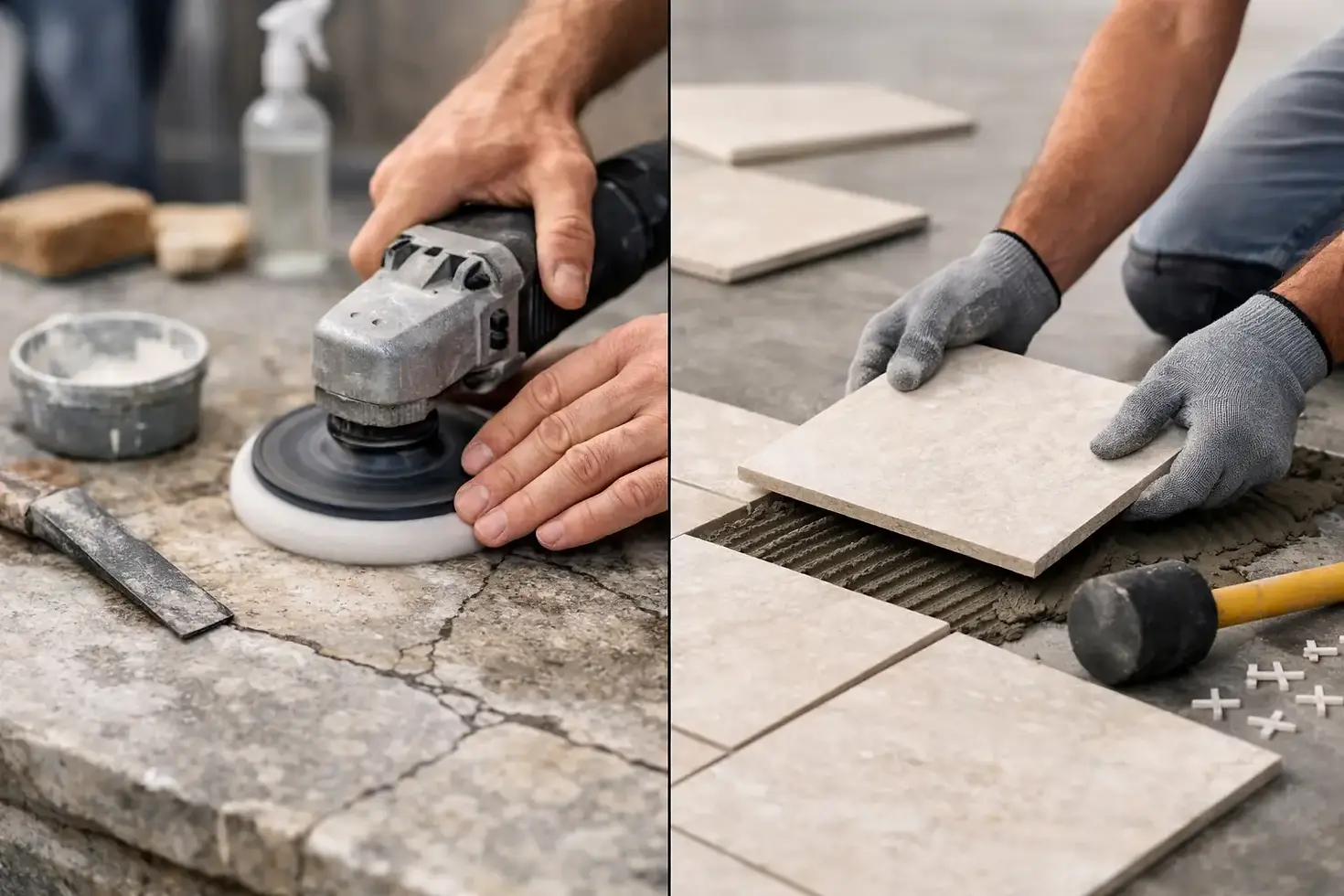
Stone Restoration vs Replacement
- brigi rodriguez

- May 20
- 6 min read
A dull marble lobby, etched travertine kitchen, or scratched stone entryway can make an otherwise well-kept property look tired fast. When that happens, the question usually comes down to stone restoration vs replacement - and the right answer is often less expensive and less disruptive than people expect.
In many cases, natural stone does not need to be torn out to look dramatically better. Scratches, etching, light staining, traffic wear, and loss of shine can often be corrected through professional restoration. But there are times when replacement is the smarter investment. The key is knowing the difference before you spend money in the wrong direction.
Stone restoration vs replacement: what is the real difference?
Stone restoration focuses on improving the surface you already have. That may include deep cleaning, stain treatment, honing, polishing, crack or chip repair, sealing, and correcting uneven wear. The goal is to bring back the stone's appearance and performance without removing and reinstalling the floor or wall surface.
Replacement means removing the existing stone and installing new material. That can be necessary when the stone is severely broken, improperly installed, structurally compromised, or damaged beyond what surface correction can reasonably fix.
For homeowners and property managers, this is not just a cosmetic decision. It affects budget, downtime, long-term maintenance, and the overall value of the property. A specialist will usually look at both the condition of the stone and the condition of the installation underneath it.
When restoration is usually the better choice
Most worn stone surfaces look worse than they actually are. Natural stone is durable, and many common problems sit at or near the surface. That is why restoration is often the first option worth considering.
If your stone is scratched from foot traffic, dulled by years of cleaning, or etched from acidic spills, restoration can often correct it. Honing removes a very thin layer from the surface to reduce damage and even out the finish. Polishing then restores clarity and shine where appropriate for the stone type and the look you want.
Restoration also makes sense when the layout, color, and overall material are still in good condition. If you like the stone but not its current appearance, replacing it may be unnecessary. The same is true in commercial settings where disruption matters. Restoring a hotel lobby, office floor, retail space, or condominium common area is usually far less invasive than demolition and installation.
There is also the question of match. Older stone can be difficult to replace piece for piece. Even if the same material name is available, the color, veining, finish, and aging may not match the existing sections. Restoration preserves continuity, which is especially valuable in larger areas.
Signs your stone may be a good candidate for restoration
A professional inspection is the best way to know for sure, but some conditions commonly respond well to restoration. Dull finish, minor lippage, surface scratches, light to moderate etching, embedded soil, soap buildup, and many topical stains are all common candidates. Small chips and cracks can often be repaired as well, depending on their size and location.
Marble, travertine, limestone, and terrazzo often respond very well to professional restoration. These materials can lose their finish over time, but that does not mean they are at the end of their life. In many homes and commercial buildings, the stone simply needs skilled correction and proper maintenance.
That said, not every stain comes out fully, and not every repair disappears completely. A dependable contractor should be honest about that. The goal is excellent improvement and long-term performance, not unrealistic promises.
When replacement makes more sense
There are situations where replacement is the better call, even if restoration is technically possible. If large sections of stone are cracked through, loose, tented, or failing because of substrate movement or moisture issues below the surface, restoration alone will not solve the root problem.
Replacement may also be appropriate when the original installation was poor from the start. If the stone is uneven, unsupported, repeatedly cracking, or separating because of installation defects, polishing the surface will not address what is happening underneath.
Sometimes the issue is scope. If only one or two tiles are damaged in an otherwise stable floor, spot replacement may be enough. If damage is widespread across a floor with structural or moisture-related failure, full replacement may be the safer investment.
There is also a practical point that property owners sometimes overlook: if you already plan to change the design, format, or material entirely, restoration may not make financial sense. If you want a different look and know you will renovate soon, replacement may align better with your overall project.
Cost is important, but it is not the only factor
People often approach stone restoration vs replacement as a simple price comparison. Restoration is usually less expensive, but cost alone should not decide it.
Replacement often includes demolition, disposal, material selection, delivery, installation, grout work, curing time, and possible interruptions to surrounding finishes. In occupied spaces, it may also create noise, dust, access issues, and business disruption. Those indirect costs matter.
Restoration tends to be faster and more contained. For many residential and commercial properties, that means less downtime and less disruption to normal use. It also extends the life of the original surface, which can be a strong value play when the stone itself is high quality.
Still, if a restored floor will continue to fail because of underlying problems, spending less upfront can become more expensive later. That is why a proper evaluation matters more than a quick guess.
Appearance, performance, and expectations
One of the biggest misunderstandings around restoration is the idea that it only "cleans" stone. Done properly, restoration is a corrective process. It can remove wear patterns, improve reflectivity, smooth out the finish, and bring back a more consistent appearance.
But expectations should stay realistic. Deep permanent staining, severe sun fading in some materials, major edge loss, or extensive breakage may limit the final result. A good specialist will explain where restoration can deliver dramatic improvement and where replacement may be needed for a truly uniform appearance.
Finish preference also matters. Not every stone needs a high-gloss polish. In some homes and commercial spaces, a honed finish is the better fit because it looks more natural, shows less etching, and offers a softer appearance. The best result is not always the shiniest one. It is the finish that suits the stone, the use of the space, and the customer's maintenance goals.
Why professional evaluation matters
Natural stone is not one-size-fits-all. Marble, travertine, terrazzo, limestone, and granite each respond differently to wear, chemicals, moisture, and restoration methods. What works on one surface can damage another.
That is why this decision should not be based on a hardware store cleaner, a buffing pad, or a general cleaning company's opinion alone. A surface may look permanently damaged when it is actually restorable. On the other hand, a floor may look like a polishing job when the real issue is movement below the tile.
A specialist should evaluate the type of stone, the severity of damage, the condition of grout or joints, the flatness of the installation, past maintenance, and any signs of moisture or structural issues. This is especially important in Florida properties, where humidity and moisture exposure can complicate floor conditions over time.
For property owners in the Tampa Bay area, working with a company that specializes in stone and terrazzo rather than basic janitorial work can make a noticeable difference in both diagnosis and final results.
How to decide between stone restoration vs replacement
Start with three questions. Is the damage mostly on the surface, is the installation still sound, and do you want to keep the existing material? If the answer is yes to all three, restoration is often the smarter path.
If the stone is loose, badly broken, or failing because of problems underneath, replacement deserves serious consideration. And if you are unsure, that uncertainty is exactly why an on-site assessment matters. What looks like a full replacement from a distance can sometimes be restored beautifully. What looks like minor wear can also reveal deeper failure once a specialist inspects it.
The best choice is the one that gives you lasting results, not just a quick visual improvement. Good stone should not be replaced casually, and damaged stone should not be restored blindly.
If your floors or stone surfaces have lost their original finish, the next step is simple: get an expert opinion before you commit to demolition. A careful restoration assessment can save time, preserve quality materials, and help you make a decision with confidence.


Comments