

When to Reseal Marble Floors and Counters
- brigi rodriguez

- May 28
- 6 min read
Marble rarely asks for attention quietly. It starts with a darker ring under a soap bottle, a spot near the sink that never looks fully dry, or a traffic lane on the floor that seems harder to keep clean than the rest. If you are wondering when to reseal marble, those small changes are often the first clue that the stone’s protection is wearing down.
Marble is beautiful, but it is also porous. That means it can absorb moisture, oils, and spills if the sealer is no longer doing its job. For homeowners and property managers, resealing is not about chasing a schedule for the sake of it. It is about protecting the finish, reducing staining, and helping the surface hold up better between professional maintenance services.
When to reseal marble depends on use, not just time
The most common mistake is assuming marble should be resealed on a fixed calendar. In reality, there is no single timeline that fits every floor, vanity, lobby, or shower. A polished marble foyer in a low-traffic home may hold its sealer much longer than a marble restroom countertop in a busy commercial property.
As a general rule, many marble surfaces need attention somewhere between every 6 months and every 2 years. High-use areas usually fall on the shorter end of that range. Lower-use interior surfaces may go longer. Kitchens, entryways, bathroom vanities, and commercial common areas tend to lose protection faster because they see more moisture, more foot traffic, and more cleaning.
Florida conditions can also play a role. In homes and facilities around Tampa Bay, humidity, sand, rain tracked indoors, and frequent mopping can all affect how long a marble sealer performs. That does not mean every marble floor needs constant treatment. It means checking the condition of the stone matters more than relying on guesswork.
Signs your marble is ready to be resealed
A marble surface does not usually fail all at once. The warning signs tend to show up gradually.
One of the clearest signs is faster absorption. If water no longer beads lightly on the surface and instead darkens the stone within a few minutes, the sealer may be weakening. This is especially noticeable around sinks, in front of showers, and in kitchen work areas.
Staining is another sign. Marble sealer does not make stone stain-proof, but it should slow absorption and give you time to wipe spills away. If routine spills are leaving marks more easily than before, the protective barrier may be worn.
You may also notice that the marble seems harder to clean. Dirt and residue can cling more stubbornly when the stone is more open and porous. On floors, worn traffic paths may start to look tired even after cleaning. On countertops, the finish may seem uneven, especially in the areas you use most.
Etching is where people sometimes get confused. If acidic products, juices, or cleaners leave dull marks, that is usually etching, not a sealing issue. Sealer helps with absorption and stain resistance. It does not prevent chemical damage from acids. If marble looks dull because of etching or wear, resealing alone will not restore the shine. The stone may need professional honing or polishing first.
A simple way to test when to reseal marble
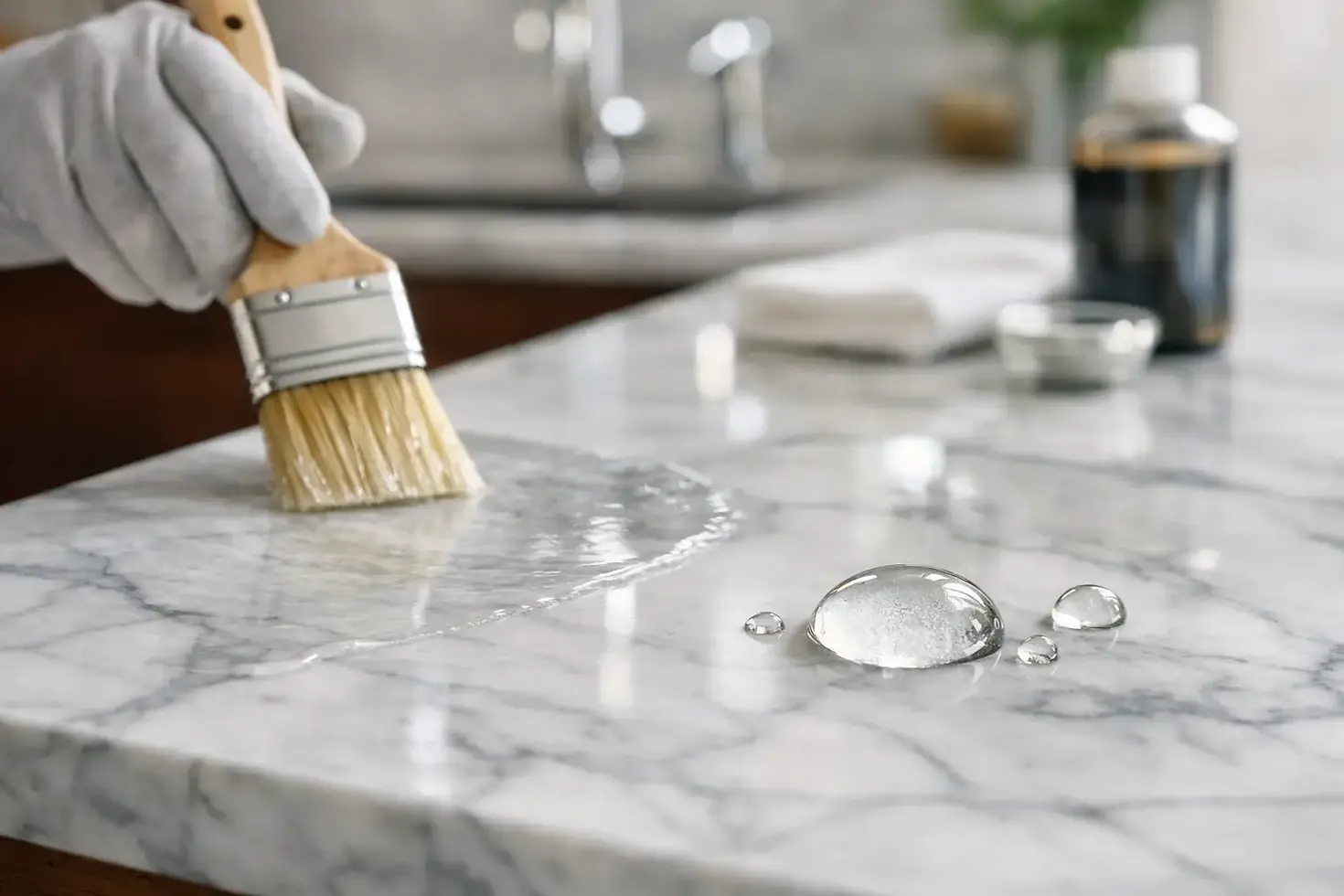
The water drop test is the easiest starting point. Place a few drops of clean water on the marble and let them sit for several minutes. If the stone stays the same color, the sealer is likely still working reasonably well. If the area darkens quickly, the surface may be ready for resealing.
This test is helpful, but it is not perfect. Different finishes react differently, and some marble colors make darkening harder to spot. Honed marble, for example, can be trickier to judge than highly polished marble. That is why the water test should be paired with common-sense observation. If the surface is staining easily, looking patchy, or absorbing spills faster than it used to, those are meaningful signs.
For larger properties, testing in more than one area is smart. A hallway, lobby, bathroom, and break room countertop may all perform differently depending on use. High-traffic sections often need attention first.
Floors, countertops, showers, and walls all wear differently
Not all marble surfaces age at the same pace, and that matters when deciding when to reseal marble.
Marble floors usually need the closest watch because foot traffic steadily wears down the protection. Sand and fine grit tracked in from outside can also act like an abrasive, especially near entrances. If a floor is cleaned often with the wrong products, that can shorten the life of the sealer as well.
Countertops deal with a different kind of stress. They see oils, soaps, cosmetics, food spills, and constant wipe-downs. Bathroom vanities often need more regular monitoring around the sink, while kitchen marble may need more frequent sealing because of cooking oils and food prep.
Showers present another issue. Water exposure is constant, but soap film and mineral buildup can make it harder to tell whether the stone itself is protected. If shower marble starts darkening around grout joints or staying damp-looking for longer periods, it is worth having it evaluated.
Decorative marble walls and fireplace surrounds often go much longer between sealing because they are not exposed to the same wear. Even then, they still benefit from proper care and occasional review.
Resealing too often is not always better
Some property owners assume more sealer automatically means more protection. That is not always true. Applying sealer too often, using the wrong type, or layering product over soil and residue can lead to uneven results. In some cases, it can leave the surface looking hazy or inconsistent.
The goal is not to keep adding product. The goal is to apply the right sealer at the right time, after the stone is properly cleaned and, if needed, restored. If the marble has scratches, etching, dull traffic lanes, or embedded soil, professional restoration may need to happen before sealing. Otherwise, you are just locking in an already worn appearance.
That is one reason specialized stone care matters. Marble is not the same as ceramic tile, and it should not be treated like a generic hard surface.
What shortens the life of marble sealer
Several factors cause sealers to wear out faster than expected. Heavy use is the obvious one, but it is not the only one.
Harsh cleaners are a major problem. Acidic or high-alkaline products can break down the protection and damage the finish. Even if a cleaner looks effective in the moment, it may be shortening the life of the stone.
Poor maintenance routines also add wear. Wet mopping with dirty water, allowing spills to sit, or using abrasive pads can all make marble harder to protect. Entry grit is another issue, especially in Florida properties where sand and moisture come indoors easily.
Finally, not all sealers are equal. Product quality, proper application, dwell time, and removal all affect performance. A rushed sealing job may not last the way the label suggests.
When professional help makes more sense
If the marble still looks clean, even, and in good condition, resealing can be straightforward. But once the surface is dull, scratched, etched, stained, or uneven, the answer is often not just more sealer.
That is where a professional inspection can save time and frustration. A stone care specialist can tell whether the marble simply needs fresh protection or whether it needs honing, polishing, stain treatment, or deeper cleaning first. For commercial properties, this matters even more because appearance, durability, and safety all affect the impression the space gives.
For homeowners, professional service is often worth it when the marble has sentimental or high replacement value. For property managers and business owners, it is usually a practical decision. Well-maintained marble lasts longer, looks better, and supports the image of the property.
TPA Stone Care works with marble and other specialty surfaces every day, so the focus is not just on applying sealer. It is on getting the surface back to the condition it should be in before that protection goes on.
How to stay ahead of the problem
The best approach is simple. Watch the marble where it gets used the most, clean it with stone-safe products, wipe spills promptly, and test the surface before assuming it is fine. For many properties, an annual check is enough to catch problems early, even if full resealing is not needed every year.
If you wait until the marble is badly stained or noticeably worn, resealing becomes only part of the solution. Catching it earlier usually means lower maintenance costs and better-looking stone over time.
Marble does not need constant attention, but it does reward the right kind of care. When the surface starts absorbing faster, staining easier, or losing that well-kept look, that is usually the moment to stop guessing and have it assessed before minor wear turns into restoration work.


Comments