

What Damages Travertine Floors Most?
- brigi rodriguez

- Jun 5
- 5 min read
Travertine can look solid and timeless for years, then start showing dull spots, scratches, and stains faster than most owners expect. If you are wondering what damages travertine floors, the answer usually is not one dramatic event. It is a series of small, preventable issues that slowly wear down the surface, especially in kitchens, bathrooms, entryways, and commercial spaces with steady foot traffic.
Travertine is a natural stone, and that matters. It does not respond to everyday cleaners, moisture, and abrasion the same way porcelain tile or vinyl does. The same floor that adds value and character to a property can lose its finish when it is cleaned the wrong way or left unprotected in high-use areas.
What damages travertine floors in real properties
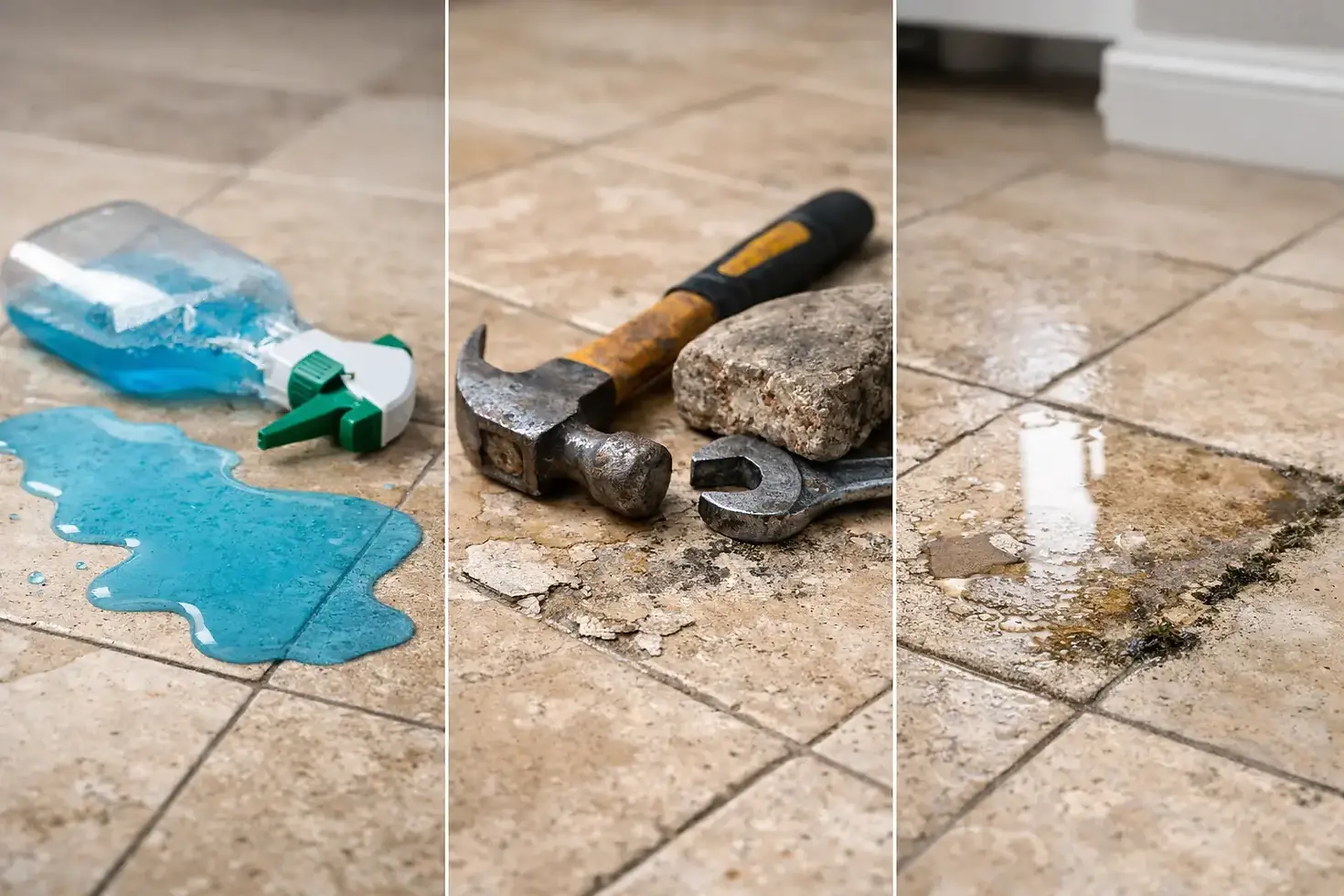
The biggest causes of damage are acidic products, abrasive dirt, standing moisture, heavy traffic, and improper maintenance. In many cases, the damage starts subtly. A floor may look a little cloudy after mopping, a little rough near the entry, or slightly darker around a sink. Over time, those minor changes become etching, scratched finish, embedded soil, and worn traffic patterns.
Travertine is also naturally porous. Even when it is sealed, it still needs the right care. Sealer helps slow absorption, but it does not make the stone bulletproof. That is where many property owners run into trouble. They assume sealing alone will prevent damage, then use harsh cleaners or allow grit to sit on the floor day after day.
Acidic cleaners and household spills
One of the fastest ways to damage travertine is with acid. Vinegar, lemon juice, bathroom cleaners, rust removers, and many off-the-shelf multipurpose products can etch the surface. Etching is not the same as a stain. A stain changes the color because something soaks in. Etching physically reacts with the calcium in the stone and leaves the surface dull or rough.
This is why a travertine floor can look worse right after someone tries to clean it. A product marketed as strong and effective may cut through soap scum, but it can also strip away the finish and leave patchy, lightened areas. In kitchens, citrus juice, tomato sauce, wine, and coffee can create similar problems if spills sit too long.
Grit, sand, and everyday abrasion
In Florida properties, tracked-in sand and fine grit are a constant issue. Even when the particles look harmless, they act like sandpaper under shoes, carts, and chair legs. Over time, they scratch the stone and wear down the polished or honed finish.
Entryways usually show this first, but hallways, living areas, and commercial lobbies can take the same kind of abuse. The damage tends to build gradually, which makes it easy to miss until the floor starts looking uneven. One section still reflects light well, while another looks flat and tired.
Standing water and moisture problems
Travertine and moisture have a more complicated relationship than many people realize. Small amounts of water from routine cleaning are usually fine if the floor is dried properly and the stone is in good condition. The problem comes from repeated saturation, lingering moisture, and poor cleaning habits.
Wet bath mats, planter leaks, appliance drips, shower overspray, and over-mopping can all contribute to darkened grout lines, mineral buildup, and staining. In some cases, moisture carries dirt deeper into the stone's pores. In others, it weakens fillers or exposes natural pits and voids that become more noticeable with wear.
Wrong mops, pads, and cleaning tools
Not all damage comes from chemicals. Some travertine floors are worn down by aggressive scrubbing pads, stiff brushes, or low-quality vacuum heads with worn wheels or beater bars. A tool that works fine on ceramic tile can leave visible scratching on natural stone.
The same goes for dirty mop water. Mopping with a heavily soiled mop does not really clean the surface. It redistributes grit and residue, leaving the floor dull and increasing surface abrasion. In commercial settings, auto scrubbers can also become part of the problem if the wrong pad or cleaning solution is used.
Why high-traffic areas wear out faster
Traffic patterns tell the story on travertine. Areas in front of refrigerators, sinks, reception counters, elevators, and entrances tend to lose their finish before the rest of the floor. That is not because the stone is failing. It is because repeated use creates friction, carries in abrasive debris, and exposes the same zones to spills again and again.
This is one of the clearest examples of why maintenance needs to match the space. A travertine floor in a quiet guest room and one in a busy office lobby do not age the same way. The stone can be identical, but the wear pattern will be completely different.
Furniture, rolling loads, and impact damage
Heavy furniture can scratch or crack travertine if it is dragged instead of lifted. Rolling carts, office chairs, and equipment can also wear down the finish, especially when wheels trap dirt. In some properties, the issue is not just movement but concentrated weight on an already weakened tile or filled area.
Travertine often contains natural holes that are filled during manufacturing or finishing. Those filled sections can break down over time in heavily used spaces. Once that happens, the floor may feel rougher and collect more soil, making the damage look worse than it did at the start.
What damages travertine floors after sealing
A common misconception is that sealing eliminates the need for specialized care. It does not. Sealing helps buy time against absorption, but it does not stop etching, scratching, or wear from foot traffic. If an acidic cleaner is used on sealed travertine, the floor can still etch. If sand is left on the surface, the floor can still scratch.
Sealer performance also depends on timing and condition. An older sealer may no longer be effective, and some floors were never sealed correctly in the first place. If the stone already has open pores, worn finish, or damaged filler, sealing alone will not restore the appearance. It helps protect a healthy surface, but it is not a fix for existing deterioration.
The damage that gets mistaken for dirt
One reason travertine problems go unaddressed is that owners often think the floor just needs a stronger cleaner. In reality, the floor may be etched, scratched, or holding residue from inappropriate products. Soap buildup, wax-like films, and hard water deposits can make travertine look cloudy even when it has been cleaned repeatedly.
That is where DIY efforts can make things worse. When a floor does not respond to normal mopping, the next step is often a harsher chemical or a more aggressive scrub. On natural stone, that can turn a maintenance issue into surface damage.
Professional restoration becomes the better option when the problem is in the stone itself rather than sitting on top of it. Honing, polishing, deep cleaning, stain treatment, and sealing can bring the floor back to a cleaner, more even finish without the guesswork.
How to protect travertine from common damage
The best protection is consistent, stone-safe maintenance. Dry soil should be removed often, especially near entrances and busy walkways. Spills should be wiped up quickly, and only pH-neutral cleaners made for natural stone should be used. Mats help, but they need to be clean and dry, not another source of trapped grit or moisture.
It also helps to watch for early warning signs. If the floor starts losing shine in small sections, feels rough underfoot, or shows dark spots that do not lift with regular cleaning, the surface may need more than routine care. Catching that early usually means simpler corrective work and better long-term results.
For commercial properties and busy households, maintenance schedules matter. The right frequency depends on traffic, use, and finish type. Some floors need periodic professional attention to stay ahead of wear, especially in lobbies, corridors, kitchens, and shared common areas.
Travertine is durable, but it is not low-concern flooring. It rewards proper care and shows neglect quickly. If your floor is looking dull, scratched, or stained, the issue is often less about age and more about the kind of damage it has been exposed to over time. When that damage is identified correctly, the floor can often be restored and protected before the wear becomes permanent.


Comments